Showing posts with label pandemic. Show all posts

Saturday, August 28, 2021

Flight of the wild geese – Australia’s place in the world of global talent

As the global pandemic has unfolded, I have been struck by how out of touch a large number of Australians are with Australia’s place in the world. Before the pandemic many Australians had become used to travelling overseas regularly – and spending large amounts of money while there – but we seem to think that our interaction with the global world is all about discretionary leisure travel. In contrast, increasingly many Australians were travelling – and living – overseas because their jobs required it. Whether working for multinational companies that have branches in Australia or Australian companies trying to break into global markets, Australian talent often needs to be somewhere else than here to make the most of opportunities for Australia. Not only technology, but even more importantly, talent, will be crucial to the economy of the future.

Watching the course of this global pandemic, I have been struck by how out of touch a large number of Australians are with Australia’s place in the world. While before the pandemic many Australians had become used to travelling overseas regularly – and spending large amounts of money while there – we seem to think that all our interaction with the world is about discretionary leisure travel. Australians stranded overseas during the pandemic have been abused on social media, as though they just wanted to have a holiday.

It's not only technology that fuels the new economy of the future - but talent

In contrast, increasingly many Australians were travelling – and living – overseas because their jobs required it. Whether working for multinational companies that have branches in Australia, Australian companies trying to break into global markets or companies based overseas, Australian talent often needs to be somewhere else than here. They are part of a globe-trotting aristocracy of labour, increasingly a different form of essential worker, fuelling the modern global economy and, as a result, the many national and local economies connected to it.

Friday, April 2, 2021

Broader and deeper - the creativity and culture of everyday life

The Impact and Enterprise post-graduate course at the University of Canberra is unique in Australia in placing creative industries and the creative and cultural economy in the broader landscape of the wider impacts of creativity and culture - both economic and social. It starts from the premise that what the broader social and economic roles of creativity and culture have in common is that a focus on the economic role of creativity and culture is similar to the focus on its community role – both spring from recognition that creativity and culture are integral to everyday life and the essential activities that make it up. In March 2021, as the course entered its third year, I gave a talk to the students about where it came from.

Increasingly I realise that everything is connected – if only we are able to recognise how and benefit accordingly. The ripple effects of creativity and culture reach far further than we might expect.

At one point one of my managers in the public service commented with a note of disapproval that I seemed to have done lots of different jobs in my career. What she didn’t realise was that I had done the same job, but in lots of different places. I was surprised that she didn’t see that because one of the things I loved most about my time in the Commonwealth public service was that every couple of years – if not months – you would find yourself doing something new.

You would never hear about this, but at the height of the pandemic, one of my former Arts colleagues found herself working around the clock in a task force set up to liaise with the major supermarkets to ensure that supplies didn’t run out, as a major attack of moronavirus stripped the shelves of toilet paper.

Thursday, November 5, 2020

Beyond a joke – surviving troubled times

We live in troubled times – but then can anyone ever say that they lived in times that weren’t troubled? For most of my life Australia has suffered mediocre politicians and politics – with the odd brief exceptions – and it seems our current times are no different. Australia has never really managed to realise its potential. As a nation it seems to be two different countries going in opposite directions – one into the future and the other into the past. It looks as though we’ll be mired in this latest stretch of mediocrity for some time and the only consolation will be creativity, gardening and humour.

A land of bushfires and choking smoke, drought and floods – and plague
Over the last 12 months we have endured bushfires and choking smoke, plague, drought and floods. Australia’s creativity and culture and the whole creative sector have been hammered and it will be the last thing to recover as we move into the new post-pandemic world. At times like this there are a few things you can rely on for consolation – the pleasure of creativity and gardening and the distractions of humour.

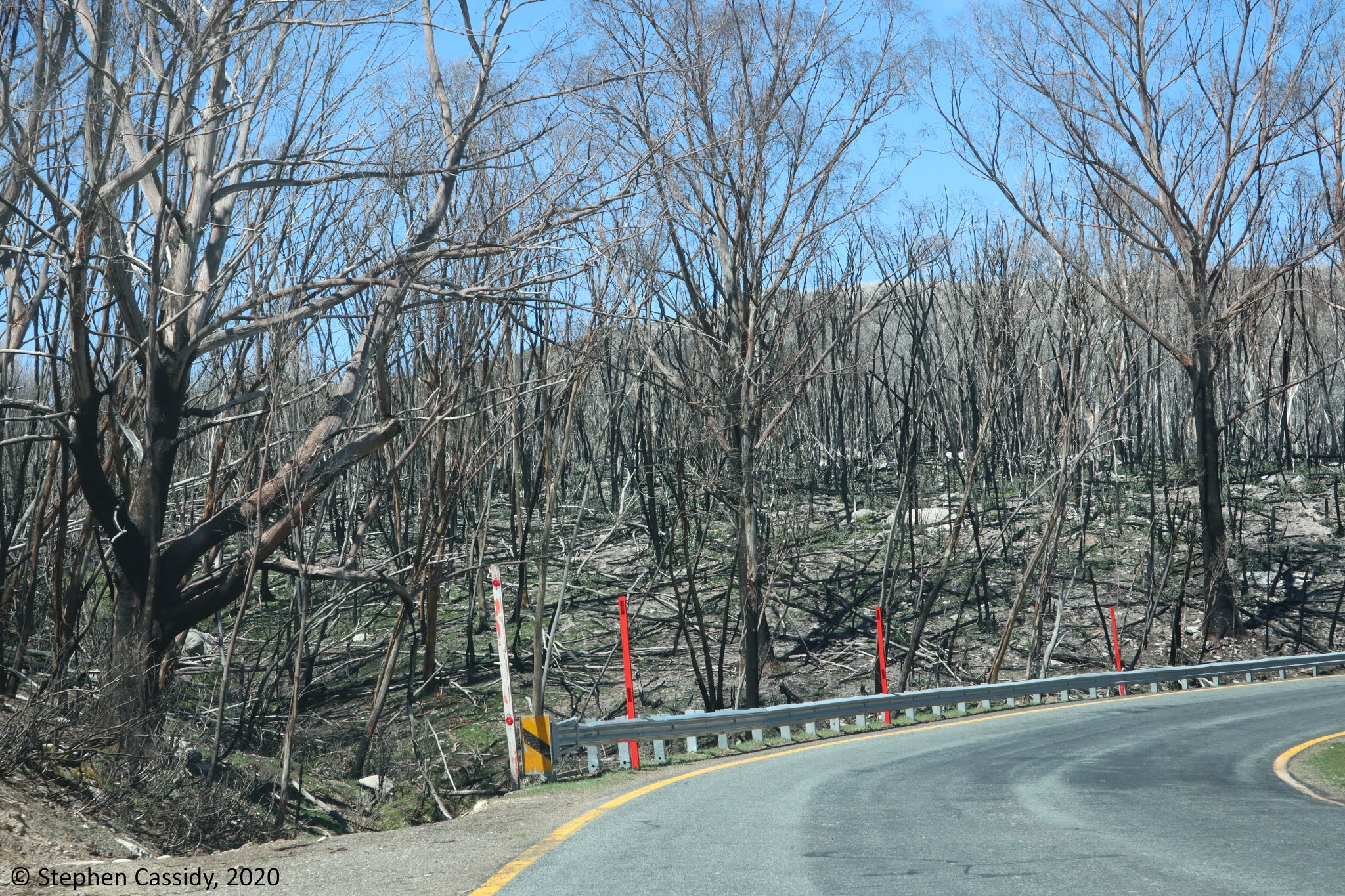
Fire-ravaged landscapes in the Snowy Mountains.
 
Over the last decade I seem to have spent most of my writing career producing articles about Australian creativity and culture. Lately some of it has been a bit grim, given the way the current Coalition Government has largely abandoned both the creative sector and the higher education sector. Together they comprise much of the clean and clever economy which should underpin a bright global future for Australia. The creative sector has responded to being sidelined by generously sharing a huge amount of advice and experience about how to survive behind enemy lines. Some days I think I should have been an economist, but instead I intend to focus on being a humourist. After all, it’s a bit like those who have written about Trump in America – at some stage you have to think ‘what more can you say?’

Monday, November 2, 2020

Remaking the world we know – for better or worse

Given the Government cannot avoid spending enormous sums of money if it is to be in any way capable and competent in the face of this pandemic, this is an unparalleled opportunity to remake Australia for the future. Usually opportunities such as this only arise in rebuilding a country and an economy after a world war. It is a perfect moment to create the sort of clean, clever and creative economy that will take us forward in the global world for the next hundred years. Creativity and culture could play a crucial part in this renewal. Unfortunately a failure of imagination and a lack of innovative ambition will probably ensure this doesn’t happen any time soon.

Given the Government in this moment cannot avoid spending enormous sums of money if it is to be any kind of a capable and competent government, this is an unparalleled opportunity to remake Australia for the future. Usually opportunities such as this only arise in rebuilding a country and an economy after a world war. It is a perfect moment to create the sort of clean, clever and creative economy that will take us forward in the global world for the next hundred years. Creativity and culture could play a crucial part in this renewal.

The Government dropped the ball responding to the bushfire emergency before largely abandoning the creative sector in the face of the pandemic.

Looking back, rather than forward
Yet I can’t help suspecting that this Government is using the pandemic and its aftermath as a convenient excuse to make the sort of changes it has wanted all along. Aligning education (or as they seem to think of it, ‘skills and training’) even more firmly with the short-term needs of the neo-liberal economy, keeping welfare firmly clamped down, largely ignoring the crisis-ridden aged care sector, with the large number of people in it who are no longer seen as productive and hence, of less importance to ‘the economy’.

Monday, September 14, 2020

The old normal was abnormal – survival lessons for a new riskier world

When I hear the call to get back to normal, I think ‘what was normal about the old normal?’ The sudden shutdown of large sectors of the economy highlighted drastically how precarious was the situation of vast chunks of Australian society, in particular but not exclusively, the creative sector. The business models implemented by the Government to help businesses survive and employees keep their jobs didn’t work at all for those who had already been happily left at – or even deliberately pushed to – the margins of society and the economy. In good times the creative sector is flexible and fast at responding. In bad times it is a disaster, as the failure of the COVID-19 support packages for the sector shows.

I am starting to think that ‘trickle down economics’, the concept that making the wealthy wealthier will inevitably flow down to those earning less – an idea seemingly admired by the Government – could be called more accurately ‘piss upon economics’. This is no rising tide lifting all boats – it’s becoming quite clear that wealth is more and more concentrated in fewer and fewer hands. The reality is that in dealing with the pandemic, the Government responded to a world they knew – and helped create. The problem is not only with the Government’s response but with the business models of the sector that made it all possible – business models that are part of a larger trend in our economy and society generally.

‘In the economy of the future the creative sector and the higher education system will be critical. Yet in facing this crisis, it seems the Government has largely abandoned both of them.’

In many ways, in its response to the pandemic, the Government has demonstrated sharply its fundamental weaknesses and blind spots. In the economy of the future the creative sector and the higher education system will be critical. Yet in facing this crisis, it seems the Government has largely abandoned both of them.

If you don't water the roots, there will be no leaves - and no trees.

Not only does the Higher Education sector train our artists and cultural workers but, as the creative sector has pointed out, 70% of artists who earn a living beyond their creative work do so through teaching. Yet universities are excluded from JobKeeper, as are university galleries and their staff. The neglect extends even further ‘Local Government institutions and their employees are excluded – that’s every regional and suburban gallery, museum and performing arts centre in Australia. The lifeblood of their communities, with nowhere to go. Coupled with the long-term run down and privatisation of technical and further education, no-one will be calling Australia the clever country any time soon – the clever dick country is more like it.

Casual, short term project work across multiple employers
This is further demonstrated by the unsuitability of the JobKeeper package for many artists and artsworkers who work on a casual basis on successive short term projects across multiple employers. Someone might be continuously employed for many years but in that time work for a succession of employers for no more than a few months at a time.

Monday, September 7, 2020

The short answer #1: Mismanaging the future - creative sector left in the lurch again

Another one of the many ways in which the current Australian Government doesn’t understand the creative sector has been underlined by its decision to wind back the JobSeeker allowance. In the clean and clever economy of the future both the creative sector and the higher education sector will be critical - yet both have largely been abandoned by the Government.

Increasingly I wonder if the current Australian Government is up to managing an economy – much of what it is doing seems more to be dictated by neo-liberal ideology than economic merit. I can’t see how many of the ideas it is pushing ahead with will help the economy – in fact they are likely to make things worse: cutting welfare (those on welfare would spend every extra dollar they get, thereby stimulating the economy quickly); cutting taxes (those getting the tax cuts, mainly focused inevitably on higher incomes have been saving, not spending in response to the economic recession); and undermining the superannuation system (which will hit the lowest paid and most insecure, with mostly intermittent work - mainly women). On top of this they are still fixated on deregulating the workforce (creating more precarious short-term casual jobs without sick leave or other protections, which made the rapid spread of the COVID-19 virus inevitable).

Flawed stimulus packages
Even their stimulus packages seem flawed in terms of what they are supposed to achieve. During the Global Financial Crisis, the Rudd Government rolled out the roof insulation scheme, which despite its flaws, did what it needed to do. It had quick take up because it didn’t involve building and it left an overall benefit to the nation by reducing energy use. In contrast the HomeBuilder scheme is still barely underway because of all the steps needed to start work and it will leave lasting benefits only to those home owners who can access it. Direct government spending on social housing or other worthwhile community projects would be far more effective at stimulating the economy, while at the same time leaving broader social benefits to the nation from taxpayer dollars.

What started me on this path was thinking how in the economy of the future the creative sector and the higher education system will be critical. Yet it seems this Government has largely abandoned both of them and is focused on bolstering sectors like coal and gas that are rapidly being overtaken by developments with renewal energy.

Consigning much of the creative sector to poverty
Another one of the many ways in which the current Australian Government doesn’t understand the creative sector has been underlined by its decision to wind back the JobSeeker allowance. From 27 September, JobKeeper will move to a two-tier system. Workers who usually worked less than 20 hours per week pre-pandemic will receive $750 per week, while full-timers will get $1,200.

Yet many of the industries with the highest proportion of those working less than 20 hours per week are also those that have faced the tightest restrictions due to the pandemic. Industry sectors such as arts and recreation, which have been most affected by the coronavirus restrictions, are also those which have the highest share of their workforce working too few hours to be eligible for the higher JobKeeper rate.

Before the pandemic these workers would have put together a living wage by working several part-time jobs. The problem is that because of the pandemic and the restrictions to deal with it, many of the jobs they used to rely on to supplement their incomes no longer exist. The Government action is compounding its neglect of this sector by consigning much of it to poverty. 

© Stephen Cassidy 2020

See also

An everyday life worth living – indefinite articles for a clean, clever and creative future
‘My blog “indefinite article” is irreverent writing about contemporary Australian society, popular culture, the creative economy and the digital and online world – life in the trenches and on the beaches of the information age. Over the last ten years I have published 166 articles about creativity and culture on the blog. This is a list of all the articles I have published there, broken down into categories, with a brief summary of each article. They range from the national cultural landscape to popular culture, from artists and arts organisations to cultural institutions, cultural policy and arts funding, the cultural economy and creative industries, First Nations culture, cultural diversity, cities and regions, Australia society, government, Canberra and international issues – the whole range of contemporary Australian creativity and culture’, An everyday life worth living – indefinite articles for a clean, clever and creative future

Remaking the world we know – for better or worse
‘Given the Government cannot avoid spending enormous sums of money if it is to be in any way capable and competent, this is an unparalleled opportunity to remake Australia for the future. Usually opportunities such as this only arise in rebuilding a country and an economy after a world war. It is a perfect moment to create the sort of clean, clever and creative economy that will take us forward in the global world for the next hundred years. Unfortunately a failure of imagination and a lack of innovative ambition will probably ensure this doesn’t happen any time soon’, Remaking the world we know – for better or worse.

Music makes the world go round – the bright promise of our export future
‘After ABBA, in an unexpected break from its traditional way of building national wealth from natural resources, Sweden managed to discover a new source of income. It was not as you would expect coal or oil. Rather than oil what it had discovered was song royalties, part of a fundamental change in the nature of modern economies which transformed them from relying solely on natural resources, transport and manufacturing to make creative content a new form of resource mining. Examples like theirs point to potentially major opportunities for the Australian music industry to become a net exporter of music,’ Music makes the world go round – the bright promise of our export future.

The old normal was abnormal – survival lessons for a new riskier world
‘When I hear the call to get back to normal, I think ‘what was normal about the old normal?’ The sudden shutdown of large sectors of the economy highlighted drastically how precarious was the situation of vast chunks of Australian society, in particular but not exclusively, the creative sector. The business models implemented by the Government to help businesses survive and employees keep their jobs didn’t work at all for those who had already been happily left at – or even deliberately pushed to – the margins of society and the economy. In good times the creative sector is flexible and fast at responding. In bad times it is a disaster, as the failure of the COVID-19 support packages for the sector shows’, The old normal was abnormal – survival lessons for a new riskier world.

Thursday, June 25, 2020

Now for the bad news and the good news – creative sector relief package finally announced

For the creative sector it’s a case of both good news and bad news in a world that has been very much about bad news. With the ongoing impact of the COVID-19 pandemic and the resulting shutdown of most of the creative sector, the announcement of massive reductions to Government support for humanities courses in universities, job losses at our major cultural institutions and continuing loss of ABC services, there has not been a lot to smile about.

First the bad news – the National Gallery of Australia will shed staff due to a range of pressures including the ongoing impact of the efficiency dividend. I’ll write about this separately later. What I want to focus on first is the good news – Arts Minister Paul Fletcher has been persuaded by relentless lobbying from the creative sector that it has been disproportionately impacted by Government action to respond to the COVID-19 pandemic and needs relief.

Life saving buoy - Emergency use only.

He in turn has managed to persuade the Government it finally needs to act. There have been hints around for a while that this might occur, coming to a head in the last few days. The creative sector will get access to $250 million worth of grants and loans under a COVID-19 recovery package unveiled today.

Monday, April 13, 2020

Caught in the past – economic blindness overlooks the creative sector

The last few months have been a wild ride. First the national bushfires and now global pandemic. In February people were being encouraged to visit fire-ravaged regional centres to help boost local economies. By March they were being urged to stay home to help reduce the spread of pestilence. I’m quietly seething at governments which knew this was coming, but just didn’t have a fixed date, and thought they could make savings by pretending it wasn’t coming. Now the Australian creative sector has largely been infected as well, but without the ventilators required to keep it alive.

What I find amazing – but not unusual ­– is that for the last five years, medical experts have been predicting another pandemic. Meanwhile penny-pinching governments have been cutting funding for medical research. Now people are going to die because Government failed. Governments exist for the big challenges, the long term issues. But we keep electing politicians who can't see beyond the next election in three years time. We've had drought and massive bush fires and now pestilence. To top it off we are about to see a whole crucial economic and social force crippled, as the creative sector is largely sidelined.

Too little, too late
Unfortunately, as the ‘too little, too late’ response to the bushfires showed, our current Government is not well suited to deal with this crisis, for two reasons – temperament and ideology. Firstly, temperament – Morrison is just not a decisive, strategic leader. He's been forced to respond to the coronavirus, but it's not a natural fit. Luckily, just like Rudd during the Global Financial Crisis, he has listened to the advice of his departments and the experts, but it was not a natural or instinctive response.

Recognising the crucial role of the creative sector is central to understanding the clean and clever industries of the future - Daylesford Primary School displays its support for STEAM - Science, Technology, Engineering Arts and Mathematics - as the engine of the contemporary world.

Secondly, ideology – the Coalition don't believe Government should have much of a role at all and they are also fixated on the myth of the centrality of the individual above community, so they aren't very good at social mobilisation or public health campaigns. As a result they are the last people you want running this sort of whole of Government response. Hopefully they'll learn, but it goes against the grain, so they will always lag and be less decisive than needed. I am equally as pessimistic about their role in leading the economic and social rebuilding that has to happen down the track.